C3.1 UK Safety Guide
Disclaimer: This guide is for reference only and carries no liability.
In fact, I’ve reminded people time and again over the years to prioritise safety in the UK – and the same applies to other European countries or destinations abroad. Incidents like sudden verbal abuse or physical assault by strangers may seem trivial, but unless you have certain connections or luck on your side, inaction tends to be the default response across the globe in such situations.
Nowadays, police credibility is declining worldwide, creating an atmosphere of widespread insecurity. It’s fair to say that most parts of China are far safer than overseas locations; developed nations like those in Europe, the US, the UK and Australia have even fallen short of the “developed” label in some areas.
The prevailing ethos now is: You are the primary responsible party for all aspects of your own safety. (This is my own phrasing, but it aligns with the reality of responsibility shifting onto individuals.)
The UK has been cutting police resources for years, with an official high-profile announcement in 2017 confirming reductions to police forces. These cuts included annual dismissals of hundreds of officers, reductions or scrapping of related benefits, and a policy of ignoring or only issuing minor warnings for low-level offences across the country. Such offences cover verbal abuse and assault, lost property, domestic burglary, vehicle theft, shoplifting, public intoxication, and other petty crimes. (Naturally, this refers only to minor violations; extremely serious incidents or those resulting in severe consequences will still be addressed.)
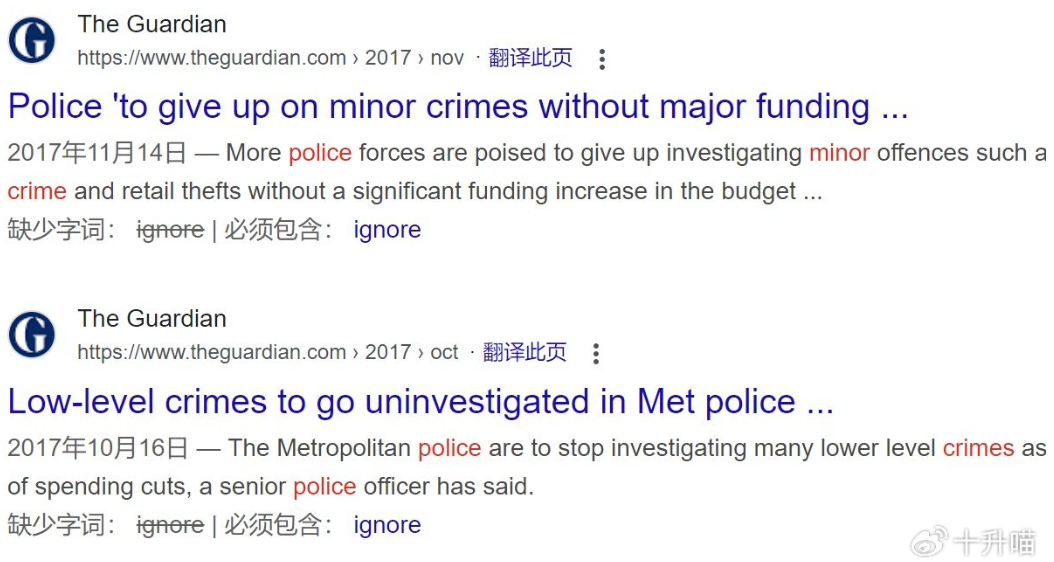

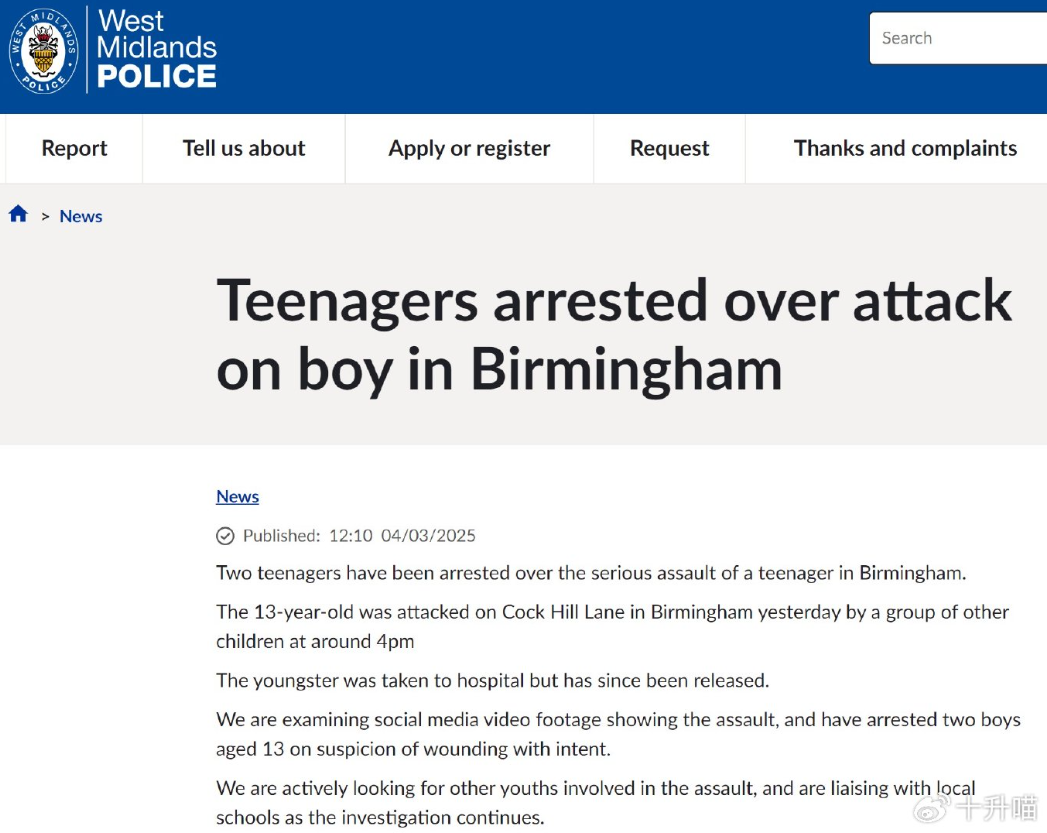
Note: While low-level offences are not pursued – for instance, if you are assaulted by a teenager, the police will not take action – the situation is drastically different if you retaliate by assaulting a foreign teenager and cause serious harm. Should you be caught (and this applies when your identity can be verified, such as via clear CCTV footage; we will cover scenarios where this is not the case later), you will face formal and severe police action.
As illustrated in the case below: In March 2025, West Midlands Police arrested two 13-year-old teenagers on Cock Hill Lane, Birmingham, over an assault on another 13-year-old that sparked significant public outrage.
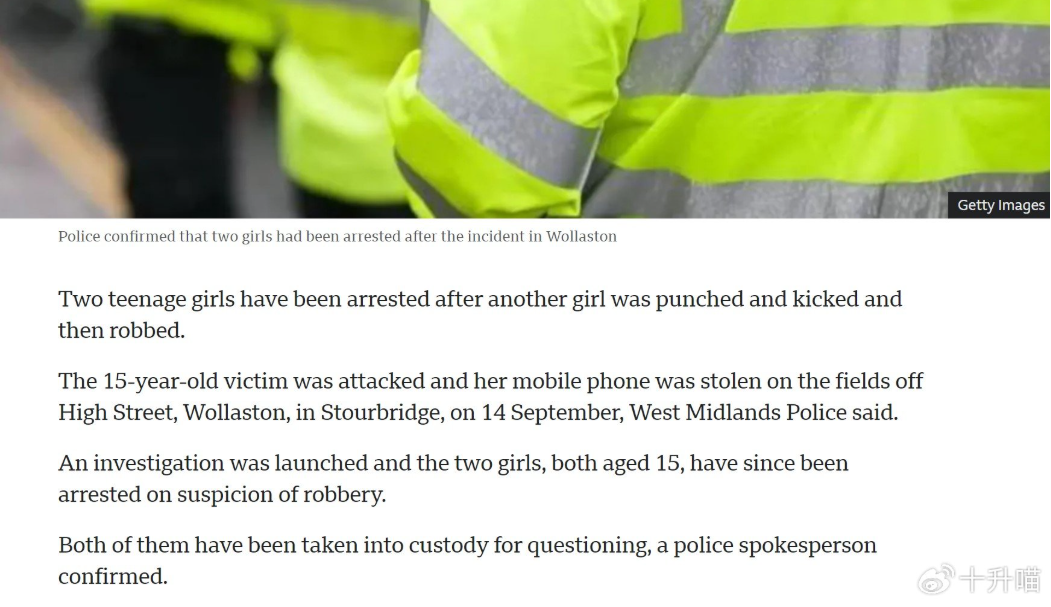
In March 2025, multiple indiscriminate assaults targeting passers-by of Asian appearance by Black individuals or teenagers were reported near Waterloo in London, UK. During that month, two Chinese international students came forward to share their experiences of being verbally abused or physically assaulted by strangers in the vicinity.
In October 2024, a Chinese man was attacked by a group of unknown teenagers in Edinburgh, who fled the scene promptly after the assault.
On 28 June 2023, a Chinese woman was on her way home by bus in Birmingham when she was suddenly verbally abused and assaulted by two foreign strangers on board. The bus driver and other passengers stood by and did nothing; the driver even opened the door to let the attackers escape. After the woman reported the incident to the police, she felt re-victimised by the UK police force.
In December 2022, a Chinese international student was shopping on Oxford Street when they were suddenly attacked by a Black man, who then fled the scene quickly.
In February 2021, a male Chinese teacher working at the University of Southampton was set upon and assaulted by four foreign strangers while jogging during daylight hours. The attackers also hurled abuse at him and demanded that he leave the UK. Despite initial police claims that the case would be dealt with severely, no follow-up action was ever taken.
On 17 March 2020, outside a student accommodation block in central Southampton, several Chinese international students were suddenly surrounded, assaulted, and verbally abused by a group of foreign minors (i.e., teenagers). When the police were called, they released the minors on the grounds of their age.
If one were to list cases of unprovoked verbal abuse and assault against people of Asian appearance in the UK, there would be far too many to count – a large number of such incidents have even made the news.
However, some Chinese immigrants and overseas Chinese who have settled in the UK for over a decade argue that these are isolated, low-probability events, noting that they have lived in the UK for more than ten years without ever being subjected to sudden verbal abuse or assault by strangers.
Well, what can be said about this? It essentially comes down to gambling with luck. When a low-probability event befalls an individual, it becomes a 100% certainty for that person. The question then is: can the individual bear the consequences of such a “low-probability event”? Safety is never a trivial matter; it pays to be cautious, as a wise person avoids standing beneath a precarious wall.
Of course, it is not only foreign nationals or teenagers who perpetrate verbal abuse, assault, and discrimination against Chinese international students or people of Asian appearance – such incidents can also involve individuals of the same nationality.
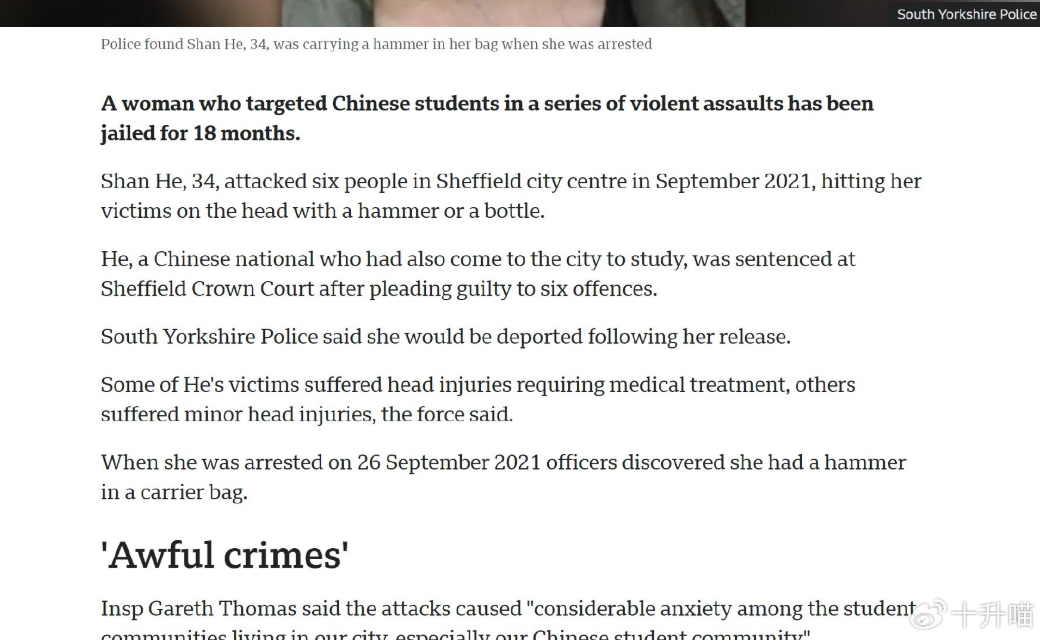
For instance, there was a case in the UK where a Chinese international student carried a hammer and attacked six people in central Sheffield, striking them on the head. As shown in the image below: a Chinese international student assaulted six people by hitting them on the head with a hammer in central Sheffield.
Maintain a safe distance from strangers at all times. Stay vigilant of your surroundings – front, back, left, and right – while walking. Avoid using your mobile phone or wearing headphones on the street. If you notice suspicious strangers approaching (such as Black individuals or teenagers lingering nearby), immediately increase the distance between you and them, scan your surroundings, and prepare to flee or seek help from passers-by or shop staff. In short, at the first sign of trouble: run, run as fast as you can, shout for help or to alert others to call the police, and take shelter in a nearby shop.
If a stranger or teenager suddenly verbally abuses or assaults you: if the perpetrator is physically imposing, part of a group, or the incident occurs in a sparsely populated, dark, or secluded area, avoid direct confrontation if at all possible. It’s best to ignore the provocation and leave immediately. Your personal safety is the top priority in such situations. If the attacker is demanding money, hand it over – saving your life comes first.
Minors in the UK are protected by law. If you become involved in a dispute with a minor, it is generally advisable to steer clear, seek assistance, and preserve any evidence of the incident.
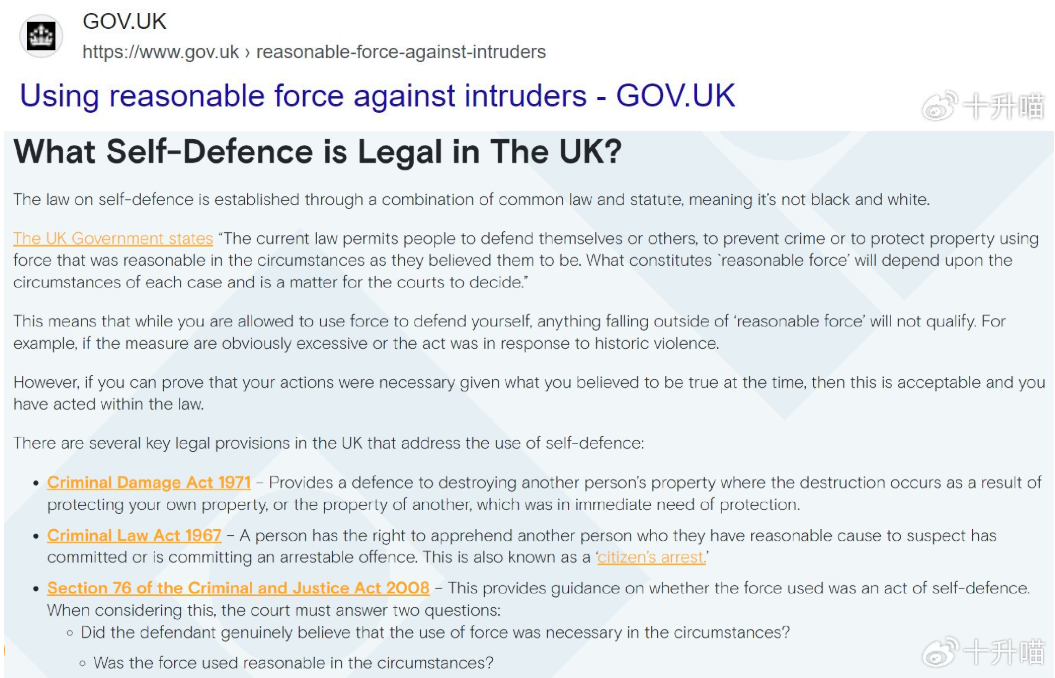
In principle, you may do so, but only in the form of reasonable defensive force.
Defending against a teenager: If evidence (such as witness testimony or CCTV footage) proves your response was within the bounds of reasonable self-defence, you will not face legal consequences. However, defining what constitutes “reasonable” can be legally complex. The determination is made by a court based on the specific circumstances, not your own assertion – and this process can be extremely time-consuming. For this reason, the general advice is to avoid confrontation with teenagers altogether, to spare yourself the hassle and the risk of being charged with excessive force.For example: if your attacker is smaller in stature or a female (and you are male), retaliating physically could easily be deemed unreasonable due to the inherent power imbalance, should the altercation escalate to serious harm.
Defending against an adult stranger: If you retaliate immediately after being assaulted, and do not render the attacker unconscious, disabled, or deceased, your actions will most likely be classified as reasonable self-defence. However, if the attacker strikes you and then flees, and you chase and attack them, this will no longer qualify as legitimate self-defence.
Important note: Under no circumstances should you use weapons (such as knives) during self-defence. Avoid carrying sharp objects like fruit knives on your person at all times.
That said, most confrontations involving teenagers involve groups acting in tandem. Outnumbered, you will almost certainly be unable to overpower them. Your best course of action is to run away as quickly as you can if you can break free; if not, protect your head to minimise injury, shout loudly for help, and appeal to bystanders. If no one comes to your aid, focus your efforts on incapacitating one member of the group by any means necessary.
In situations with no CCTV and no witnesses who know you personally: if a teenager or stranger verbally abuses or assaults you, you may retaliate verbally or physically – provided the resulting injury to the perpetrator is minor – and then flee the scene; in most cases, the matter will be dropped. However, if your actions lead to severe harm (unconsciousness, disability, or death), modern technology will likely track you down quickly, and you will face serious legal peril.
In settings like schools, dormitories, or other public spaces, assess whether direct confrontation is appropriate. Even if you could “stand your ground” (unless there is no surveillance or you are confident of winning), it is generally advisable to address the situation calmly and respectfully, or to record evidence of the incident.
In summary, when facing discrimination, assault, or verbal abuse abroad: unless you are confident in your ability to control the force of your retaliation, overpower the attacker, and escape quickly, or you are with a group of strong companions, it is best to keep your distance from any situation or individual that feels off – regardless of the perpetrator’s age or gender. Of course, if you can fight back safely, do so moderately and reasonably, then make a swift exit.
It is advisable to minimise wearing valuable items while abroad. If you drive a high-value vehicle or reside in an expensive property, ensure you put in place multiple layers of security measures in advance, or consider hiring security personnel.
When unlocking a flat door or any other entrance, if you notice someone loitering nearby and lingering as if waiting for you to open the door, do not unlock it immediately if you are unsure of their intentions. Observe the situation first, walk away, and return to open it later. Keep your mobile phone and other valuable items in a bag, and hold the bag in front of your body.
If someone approaches you asking for help, only assist with genuine requests (such as directions) when there are plenty of other people around. Be wary of suspicious scenarios: for example, if someone pretends to have lost their keys, asks you to help carry something to a specific location, or tries to distract you into taking out your phone – especially when there are few bystanders. Do not engage and leave promptly. People with legitimate needs for help will usually turn to shopkeepers or the police.
In the event of any emergency abroad, remember that your pride and money are insignificant – prioritise your safety and respond flexibly to the situation.
Protect yourself in the UK by avoiding lingering in sparsely populated, remote areas or dimly lit places after dark. If you encounter people who are intoxicated, keep your distance and quicken your pace.
Minimise the time you spend alone outdoors and always try to stay in a group. At busy locations like bus or train stations, first scan your surroundings for anyone approaching suspiciously. If someone gets close, do not hold your phone or other small valuables in your hand – store them in your pocket instead, even if you are on a call (end the call quickly and put the phone away). Keep your bag in front of or close to your body. Stations are often crowded, so be alert to common scams: for instance, someone asking to borrow your phone to make a call, or one stranger distracting you with conversation while another snatches your suitcase, phone, or bag.
Keep your valuables and identification documents separate – do not store them all in the same bag. You can keep them in the pockets of your clothing instead. If your clothes have no pockets, avoid carrying original documents altogether and bring copies instead.
Take out insurance. Most university halls of residence will already have insurance in place, but if you rent private accommodation and own valuable items, it is worth purchasing a policy (though this is not mandatory). Store your belongings in separate locations, draw up an inventory of your items, keep hold of receipts, and take photos of receipts to organise in a digital folder. This will help ensure your insurance provider can cover at least part of any losses.
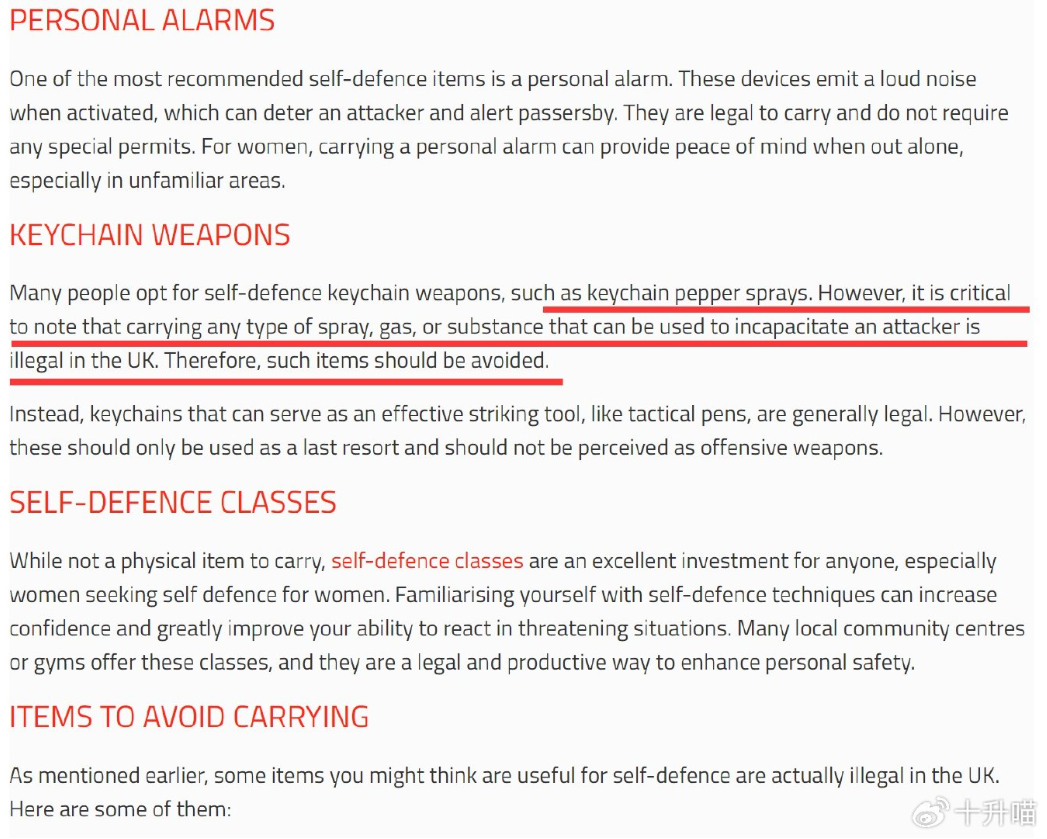
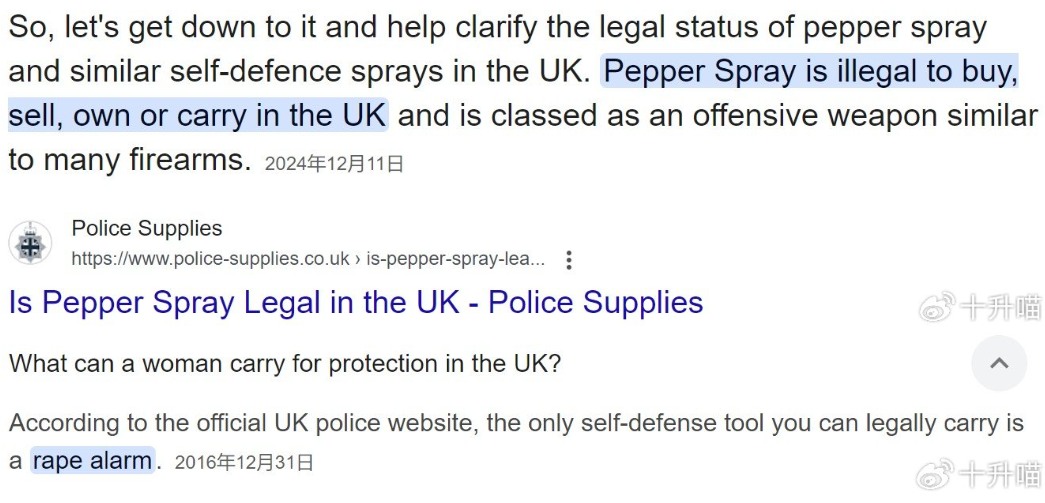
Carry a small device that can emit a loud noise on your person. According to advice from 2016, the only legally permitted self-defence item in the UK is a personal alarm that emits a loud siren.
Reminder: Based on the latest updates, it is recommended that you do not carry pepper spray.
When moving house, do not leave valuable items outside in advance if your removal vehicle has not yet arrived. There have been numerous incidents in the UK where thieves have made off with belongings left unattended while people waited for their moving transport to turn up.
You may use your mobile phone while dining, but keep a firm grip on it – never place it on the table. If you notice someone approaching, tuck it into your pocket immediately. This is especially crucial if a stranger pretends to be staff and approaches with a menu to ask you questions; your first instinct should be to clutch your valuables tightly. Such thefts are common, as the thief can snatch the phone from your hand and flee to a waiting motorbike accomplice outside.
Do not let your guard down even at tourist attractions or on streets with police present. There have been multiple cases of thieves stealing bags and phones right in front of police officers, who will often decline to intervene, claiming it falls outside their remit. They may only advise you to file a police report or offer verbal reassurance.
It is advisable to install security cameras. Even if your accommodation already has built-in surveillance, consider fitting an additional one of your own – instances have occurred in the UK where existing CCTV systems “malfunctioned” conveniently.
If international students encounter problems in the UK, besides contacting the police, remember to reach out to your university. Most institutions offer free support to their students. For serious incidents, you may also seek assistance from the media, your local council, or the courts.
Generally, when international students report issues to their university and wish to pursue legal action, most UK universities provide free legal assistance to their students – though this is subject to the institution’s specific policies.
Contact the Ministry of Foreign Affairs via the 12308 helpline. However, this should be done cautiously, as per the scenario outlined in the text below the image.

Seek assistance from the Chinese Embassy or Consulates in the UK. Embassies and consulates typically provide supportive help, such as offering recommendations for legal services or translation services based on the specific circumstances.
Report the incident to the police. In most non-emergency cases, you can call the non-emergency police number 101 or visit your local police station in person. If you wish to report a crime anonymously, you can call the Crimestoppers hotline on 0800 555 111 or submit a report online.
Gathering evidence is extremely important. Even if you have a medical report documenting your injuries, without concrete evidence (such as CCTV footage) that clearly identifies the attacker, the police will generally only take a statement and the case is unlikely to progress further. For students, after reporting the issue to their university, the institution will usually consider granting extensions for essay submissions or other academic tasks on a case-by-case basis. However, without evidence – particularly evidence that confirms the perpetrator of discrimination is a student at the university – it will also be difficult for the matter to be followed up.
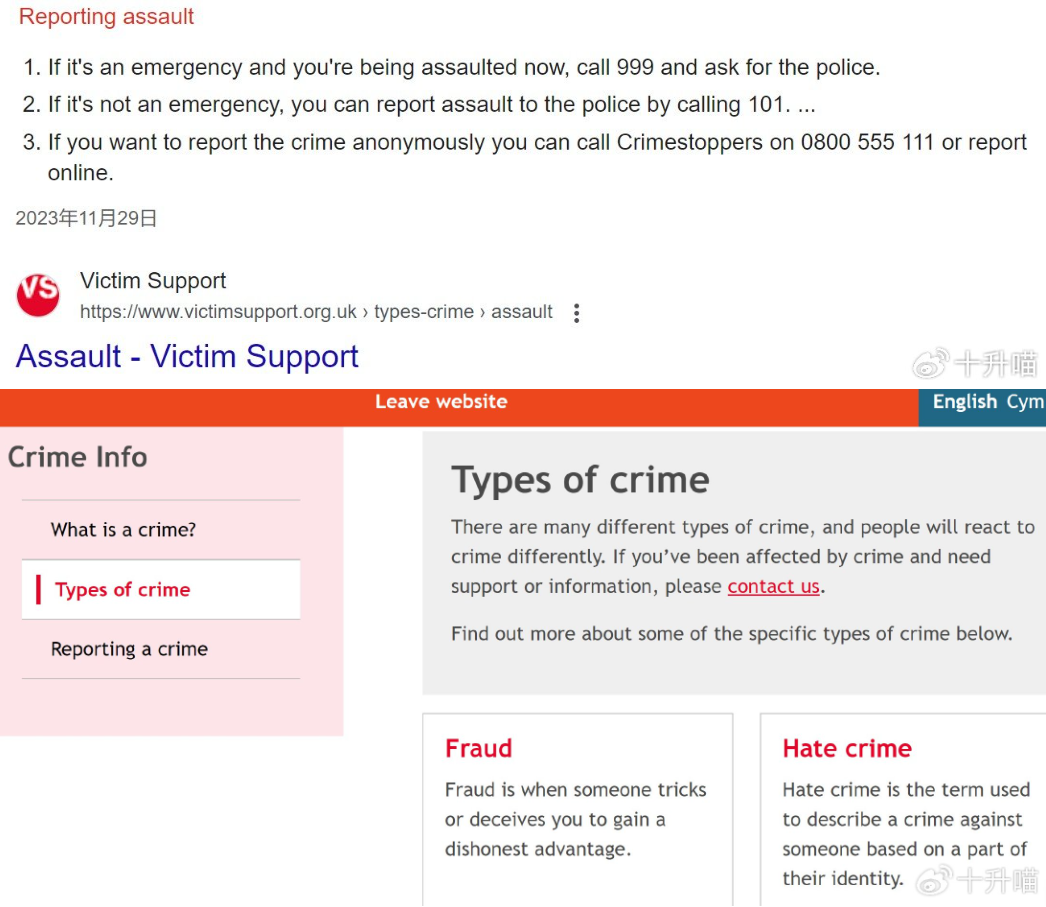
Alternatively, you can make a report via the police’s official website. Through the UK police’s online reporting portal: https://www.report-it.org.uk, after completing the required information (including uploading evidence), the police will take corresponding action based on the circumstances of the case

Your online report will be sent immediately to the relevant police station for investigation, but it may take several hours or longer to be processed. Therefore, do not submit an online report in the following situations:
The offender is still at the scene
You or anyone else has suffered serious injury or is in immediate danger
You believe the offender may return
In the above circumstances, please call 999 immediately – the police will respond without delay.
UK Police and Emergency Services: 999 (dial 101 for non-emergency police matters)
Global Emergency Call Centre for Consular Protection and Services of the Chinese Ministry of Foreign Affairs: +86-10-12308 or +86-10-59913991
Chinese Embassy in the UK: +44-20-74368294 (24-hour consular protection and assistance); +44-20-76120250 (student services hotline during working hours)
Chinese Consulate-General in Manchester: +44-161-2248986 (24-hour consular protection and assistance)
Chinese Consulate-General in Edinburgh: +44-131-3374449 (24-hour consular protection and assistance)
Chinese Consulate-General in Belfast: +44-7895306461 (24-hour consular protection and assistance)